
For organisations in Greece · November 2026
Invitation to pilot: low-cost homegrown microgreens
Challenges addressed
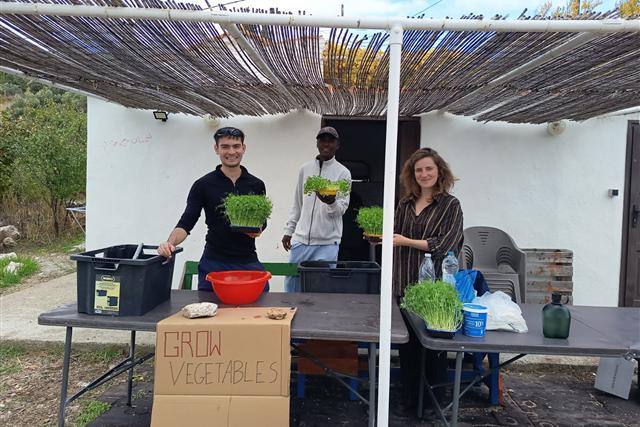
- Poor diet quality
- A doctor we spoke to in Vial Camp, Chios, suggested that most of the refugees she treated daily had issues caused by poor diet.
- Idleness and waiting
- A mental health worker in Lesvos told us that having nothing to do while waiting on an asylum decision takes a real toll on people.
Why this solution?
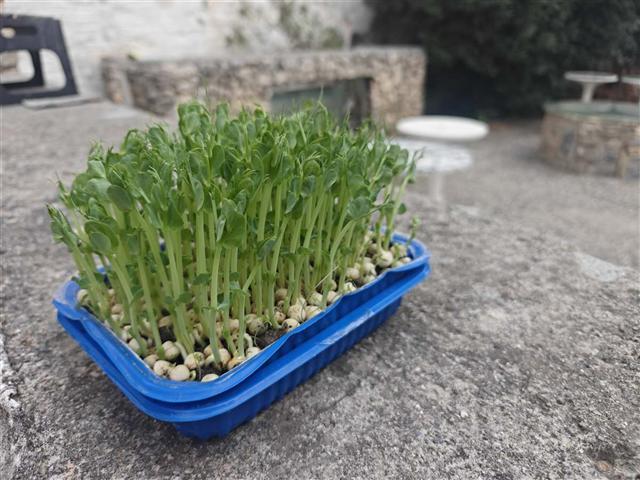
Microgreens are on average 5x more nutrient-dense than mature vegetables, and can help supplement the calorie-rich but un-diverse diets catered to refugees in Greek camps.
A home-grown intervention drives cost down, gives people more control over their diets, and combats idleness in refugee camps.
Our offer
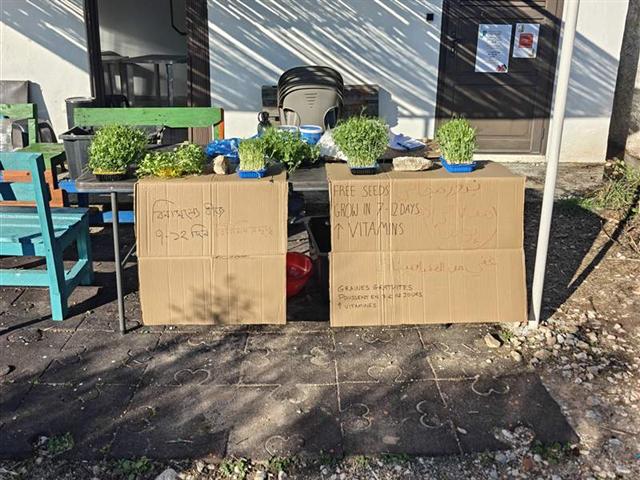
We want to partner with organisations across Greece to reduce hidden hunger in refugee camps.
We are offering to send up to 4kg of free seeds to trial, enough to sow about 390 boxes of microgreens.
We'll adapt the pilot to your context, but typically: distribute seed (freely) every week and share the videos. Tell us how many weeks it took for the seeds to run out, and how residents responded to the programme.
We have enough seed for five organisations this round.
If the pilots go well, we'll negotiate with suppliers for cheaper seed and look for funding to keep this going.
If taking part in this pilot is of interest to you, please write to us at hello [at] fromseedtoshelter [dot] com.
Please include your organisation's name, where you work, and a shipping address.
Video tutorials

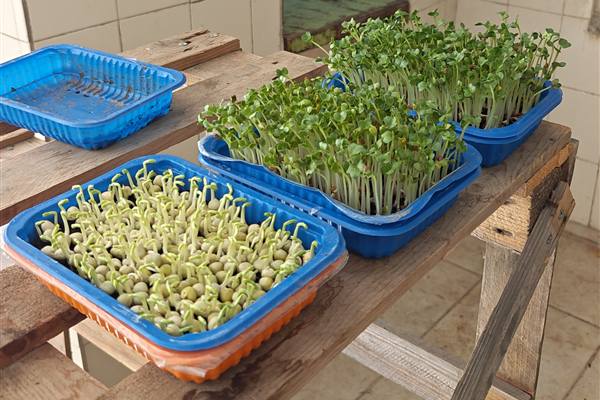
We built video tutorials in the languages most spoken by refugees in Greece. In the videos, we demonstrate how to use recycled materials easily found in camp settings, such as disposable boxes from mealtimes.
- English
- العربية (Arabic)
- فارسی (Farsi)
- Français
- Türkçe
- বাংলা (Bengali)
- Ελληνικά (Greek)
Cost to sustain programme
If your organisation were to run a sustained programme following the pilot period, it would have costs in this ballpark:
€0.02 per person a day, for two 10g servings: about €0.50 a month
€0.06 of seed per radish box, which yields about 58g
€0.17 of seed per pea box: about 218g over two harvests, as it regrows
Two servings a day, one radish and one pea, at lunch and dinner, meet this share of a person's minimum daily needs under the Sphere standards:
| Vitamin | From two servings | Share of minimum |
|---|---|---|
| A | 70 μg | 13% |
| C | 12.7 mg | 31% |
| E | 4.9 mg | 62% |
| K | 41 μg | 85% |
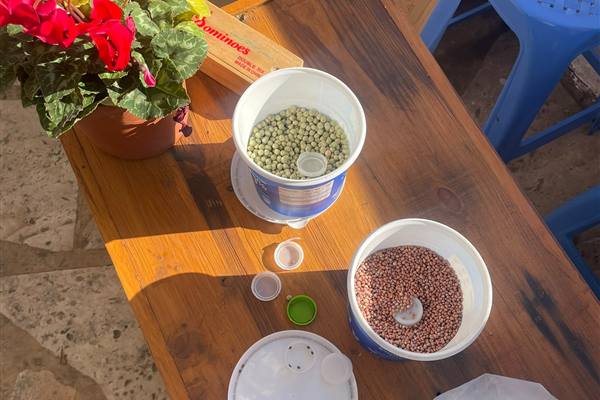
Interested? Write to us at hello [at] fromseedtoshelter [dot] com.